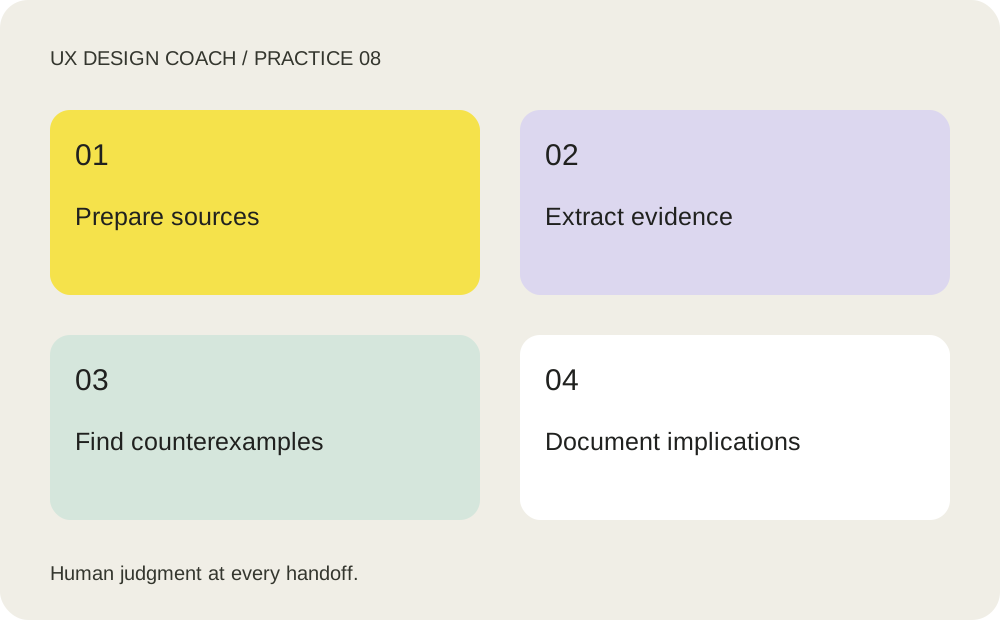
Do the work, step by step
- Prepare de-identified notes with stable source IDs and relevant context. Separate real interviews from desk research and practice datasets.
- Ask AI to extract observations first, preserving exact quotes only when supplied. Review a sample against originals before asking for themes.
- Group observations by task and friction, then inspect outliers and contradictory evidence. Repetition in a small convenience sample is not prevalence in the market.
- Turn each candidate finding into a design implication plus an unanswered question. Record who reviewed it and what additional evidence would change the decision.
A prompt to adapt
Replace the bracketed inputs with your own context. Copy this prompt into your chosen tool.
From these notes produce source ID, observation, exact supporting text, candidate theme, contradictory source and open question. Keep extraction separate from interpretation. Use ‘not supplied’ for absent evidence. Never construct composite quotes. Suggest research follow-ups and label them as proposals.
Your practice assignment
Create a ten-row evidence table. Pick the strongest theme and deliberately search the notes for a counterexample.
Review checkpoint
Every insight has a traceable source and a stated limitation. No synthetic persona is presented as an interviewed customer.
Source and teaching context
Anthropic: Cowork and chat are now one Claude. Product and method references checked October 24, 2026. Exercises are UX Design Coach teaching recommendations, not measured tool benchmarks. Interfaces and plan access can change.
Get the free working templates →