Do the work, step by step
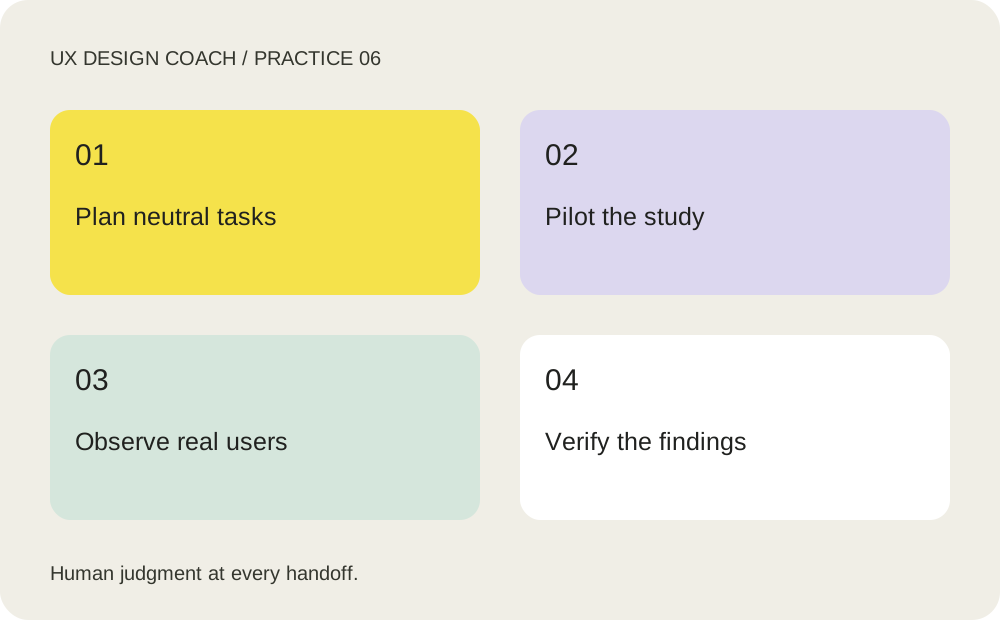
- Define the decision, relevant participant characteristics and neutral tasks. Ask AI to flag leading wording. ‘Arrange a consultation next week’ is more neutral than ‘Click Book now.’
- Pilot the prototype and script. Obtain informed consent for recording and any AI processing; use approved systems, minimize identifying data and follow your organization’s retention rules.
- Observe real participants. Record task completion, assistance, errors and context. Keep quotations separate from interpretation and note prototype limitations. AI walkthroughs are expert-style inspection hypotheses, not participant sessions.
- Give AI anonymized notes with session IDs to draft a findings table. Check each source, retain contradictory cases and prioritize barriers by impact and observed evidence. Retest the revised flow.
A prompt to adapt
Replace the bracketed inputs with your own context. Copy this prompt into your chosen tool.
Draft a moderated usability plan for [decision] with [participant criteria]. Include neutral scenarios, success criteria, non-leading follow-ups and a pilot checklist. Then, using only supplied session notes, summarize observation, session ID, impact, interpretation and uncertainty. Do not fabricate participants or generalize a small qualitative sample into population percentages.
Your practice assignment
Pilot the booking flow with a consenting colleague as a script check, then recruit relevant users for the real study. Log where the pilot required a leading explanation.
Review checkpoint
Findings trace to observed sessions. Synthetic personas can suggest questions but cannot validate usability, demand or accessibility.
Source and teaching context
W3C WAI: evaluating accessibility. Product and method references checked October 24, 2026. Exercises are UX Design Coach teaching recommendations, not measured tool benchmarks. Interfaces and plan access can change.
Get the free working templates →