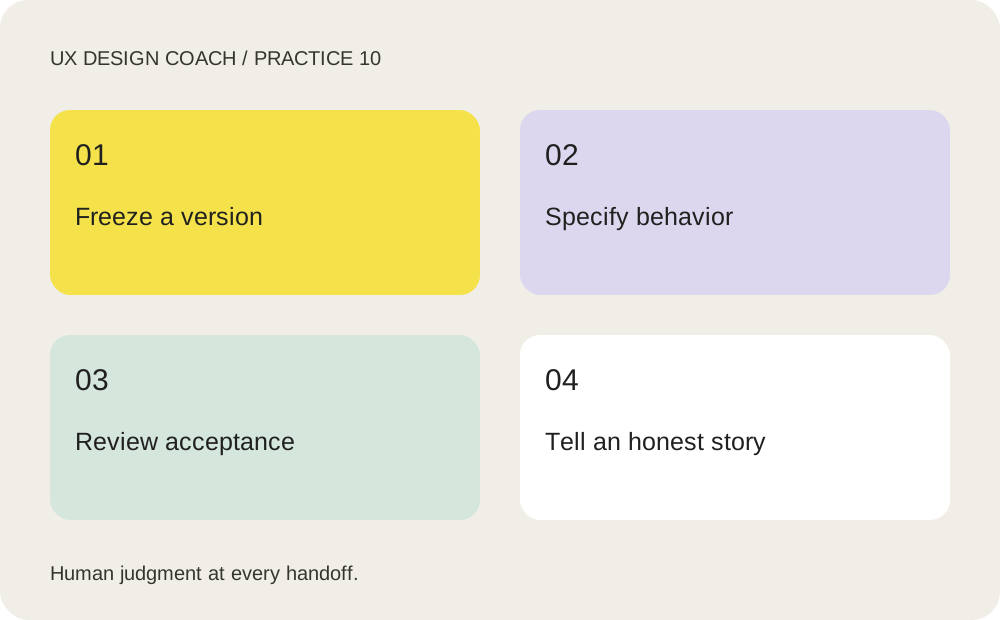
Do the work, step by step
- Freeze an accepted version of the prototype and document scope. Map components, states, content, data assumptions and API dependencies; distinguish working behavior from simulation.
- Ask AI to draft acceptance criteria from the approved specification. Have engineering review feasibility, security, performance and edge cases before estimating production work.
- Create a QA matrix across devices, input methods and failure states. Assign owners and capture evidence of fixes. Track unresolved issues instead of hiding them in a polished demo.
- Write the case study around problem, evidence, alternatives, decisions, testing and limits. Describe exactly how AI helped and where you made the judgment. Never turn a prototype exercise into a client result.
A prompt to adapt
Replace the bracketed inputs with your own context. Copy this prompt into your chosen tool.
Using approved prototype [version] and spec [version], draft a handoff with component inventory, state table, content rules, simulated features, dependencies, acceptance criteria and open questions. Flag contradictions. Then outline a case study separating observed outcomes, hypotheses and untested work. Do not invent business impact.
Your practice assignment
Package the booking flow with a state table, five acceptance criteria and one-page decision story. Ask another person to identify what is ready and what remains unknown.
Review checkpoint
An engineer can understand the intended behavior without guessing. The portfolio states whether the project is practice, prototype or shipped work.
Source and teaching context
Figma: AI prototype generator. Product and method references checked October 24, 2026. Exercises are UX Design Coach teaching recommendations, not measured tool benchmarks. Interfaces and plan access can change.
Get the free working templates →